





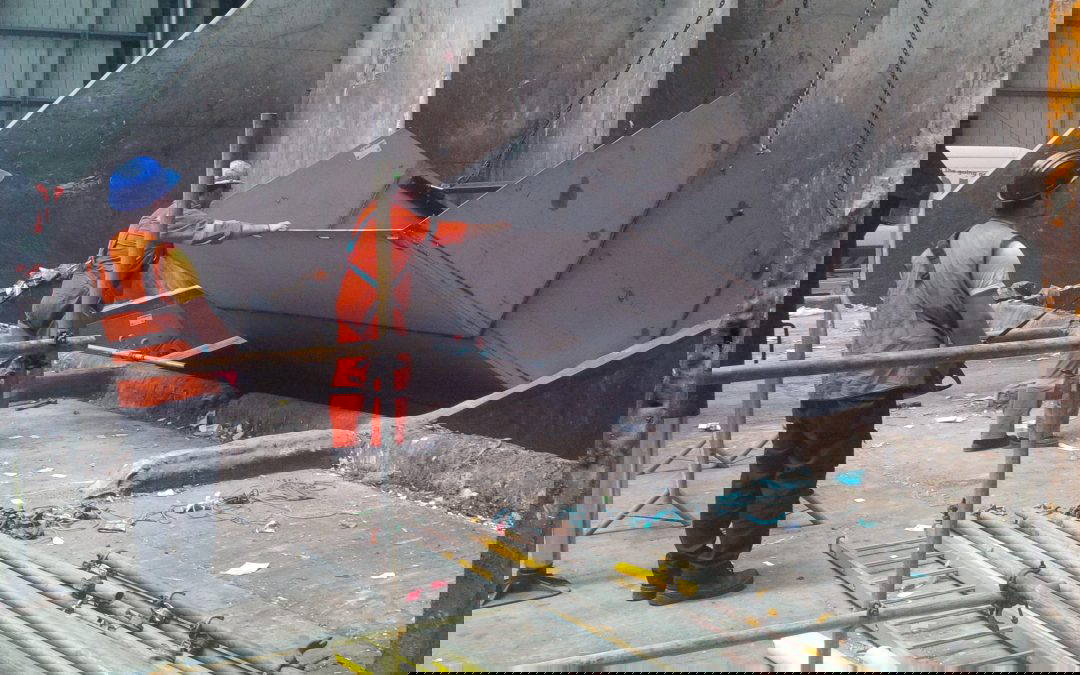
CASE STUDY: An Energy Recovery Facility (ERF) required a robust, reliable solution to address ongoing blockages and flow issues in its waste hall tipping chute.
Overview
The chutes are a critical interface between waste delivery vehicles and the downstream recovery process, handling high volumes of household waste that contains moisture, corrosive contaminants, and mixed materials.
Over time, degradation of the original concrete chute led to frequent waste buildup, repeated interventions, and disruptions to normal operations. Kingfisher Industrial was engaged to engineer, manufacture and install a replacement chute system designed to improve flow performance, resist corrosion and reduce maintenance exposure.
The Challenge –
The waste stream handled by the ERF placed sustained demands on the tipping chute. Continuous impact and abrasion gradually wore away the concrete chute surfaces, exposing internal rebar.
As the concrete surface degraded and the rebar became exposed, waste began to stick to the chute base and side walls. This resulted in material accumulating inside the chute and spilling onto surrounding areas within the waste hall. To restore flow, engineers were required to perform both manual and mechanical interventions in the waste hall. This increased safety exposure and caused unplanned operational interruptions when blockages prevented effective waste transfer.
The key challenges included:
- Degradation of concrete chute surfaces
- Exposed rebar encouraging material hang-up
- Frequent blockages restricting waste flow
- Increased manual intervention by site personnel
- Risk of production disruption.
Engineering Review –
Kingfisher carried out a technical assessment of the waste hall tipping chute and its operating conditions. Particular attention was given to the combined effects of corrosion, abrasion, and impact from mixed household waste.
The review focused on:
- Identifying areas of accelerated surface degradation
- Understanding how corrosion was affecting flow behaviour
- Assessing opportunities to improve flow consistency and chute longevity
- Selecting the correct lining solution capable of withstanding the corrosive and erosive environment.
The review confirmed that repair of the existing concrete structure would not address the root cause of the blockages. A complete replacement chute manufactured from a corrosion-resistant, wear-protected material was identified as the most reliable long-term solution.
The Kingfisher Solution –
Kingfisher designed and fabricated a new waste tipping chute manufactured from K-FLOW metallic wear-resistant material.
The K-FLOW system was selected for its ability to:
- Resist corrosion in aggressive waste environments
- Withstand sliding abrasion from bulk waste materials
- Promote consistent material flow through the chute
- Deliver long service life with less need for manual maintenance and intervention.
The chute was engineered as a complete replacement, designed to integrate directly with the existing waste hall structure and operational layout.
Key Improvements –
The replacement chute addressed the root causes of the original performance issues rather than simply repairing worn surfaces. By introducing corrosion-resistant metallic protection, the new chute provided a stable internal surface that supports reliable flow and resists further degradation.
This reduced the conditions that previously led to material build-up and manual intervention, improving both operational reliability and safety.
Manufacture and Protection
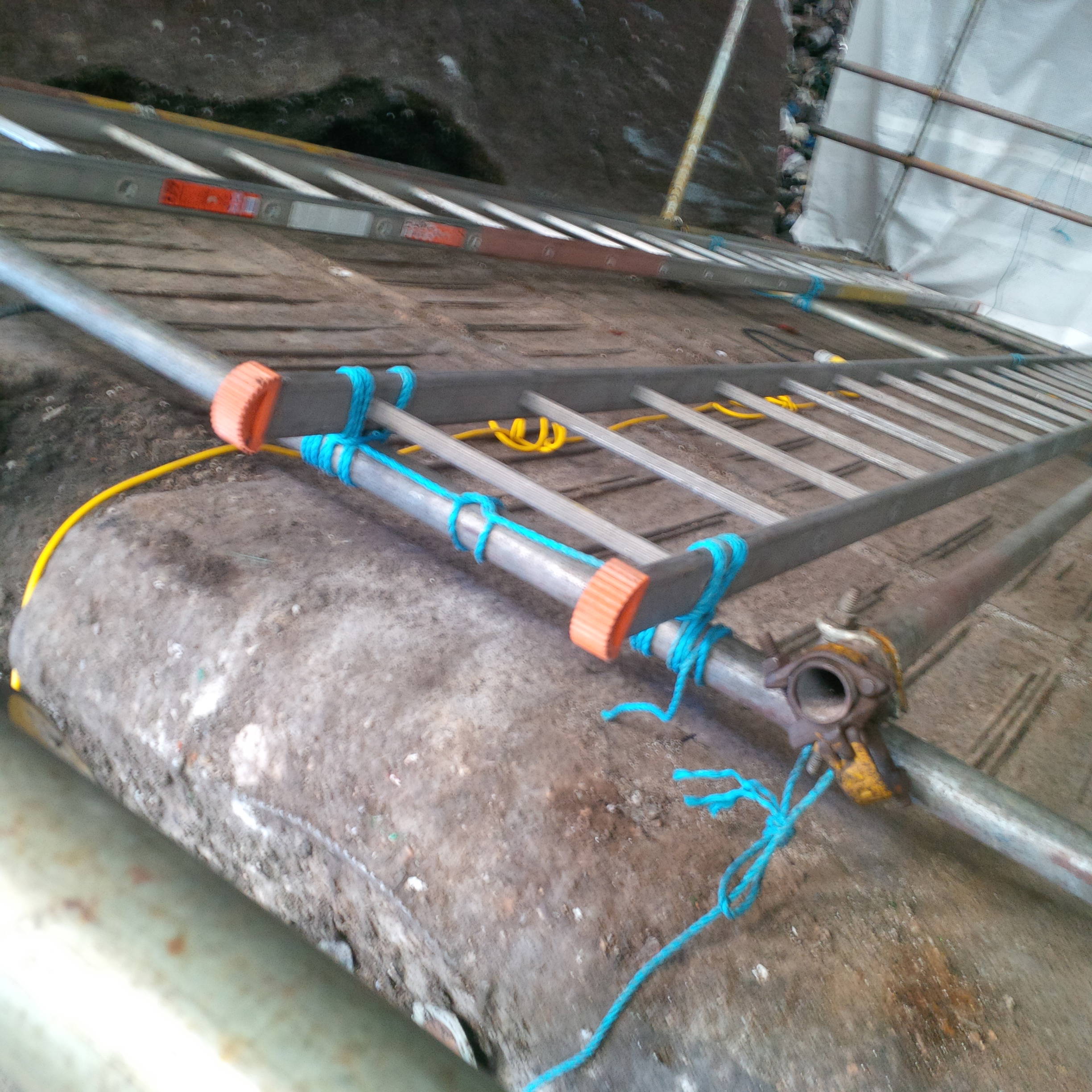
Worn waste Chute showing exposed rebar, which also encourages material to build up.
Worn chute condition – Images of the original chute show extensive surface degradation caused by corrosion and abrasion. The worn internal surfaces directly contributed to waste blockages and flow restrictions.
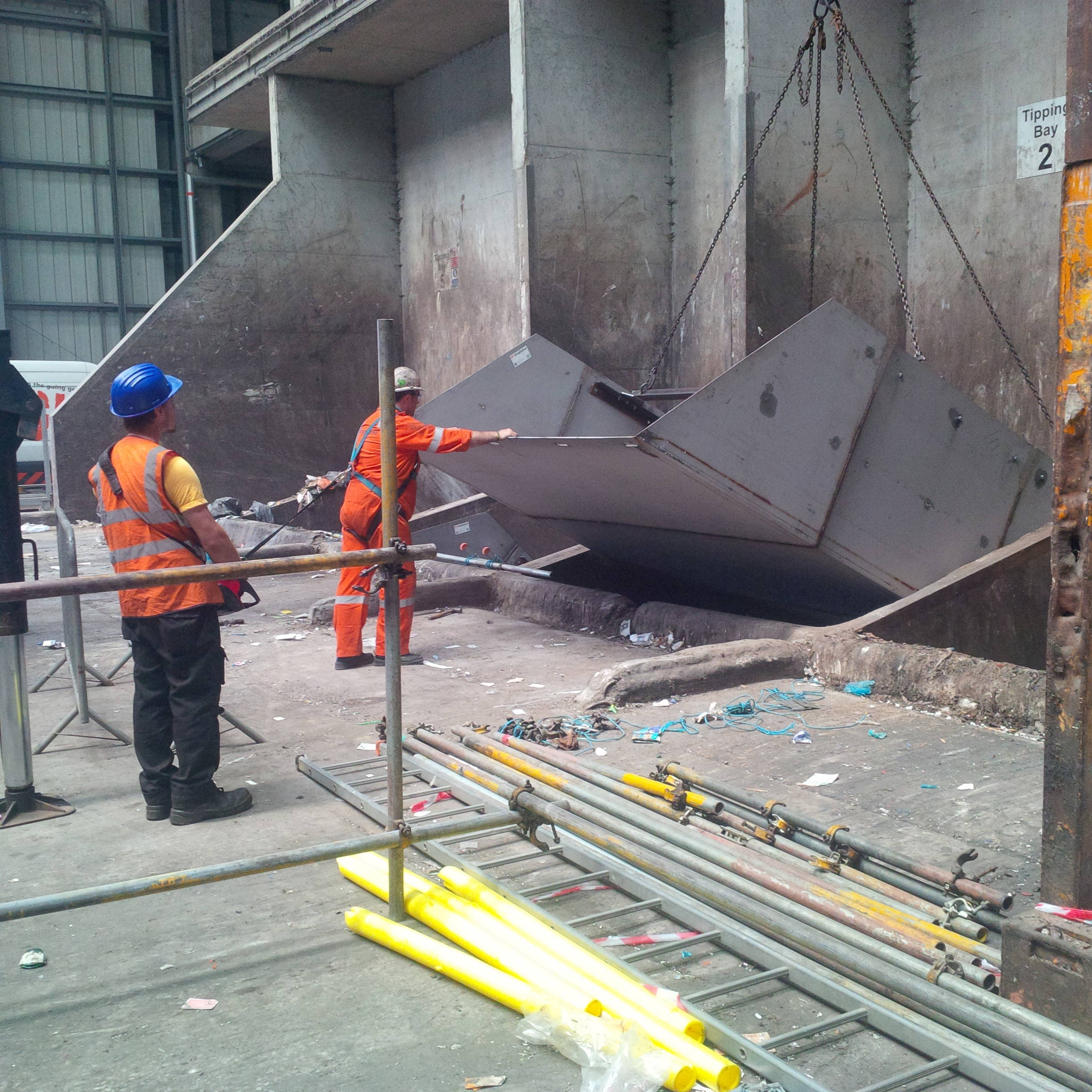
The replacement K-FLOW waste chute was delivered to the site as a complete, replacement fabricated unit, ready for installation. This approach reduced site work and minimised disruption within the waste hall. The same hiab was used to carry out the lifting operation when the chute was lifted and installed inside the tipping hall chute.
New waste chute being installed
New waste chute being installed
Waste Chute Installation – Installation was carried out in coordination with the site’s operational engineering team. Careful planning ensured the chute was lifted, positioned and secured safely and efficiently using existing lifting equipment.
waste chute installed
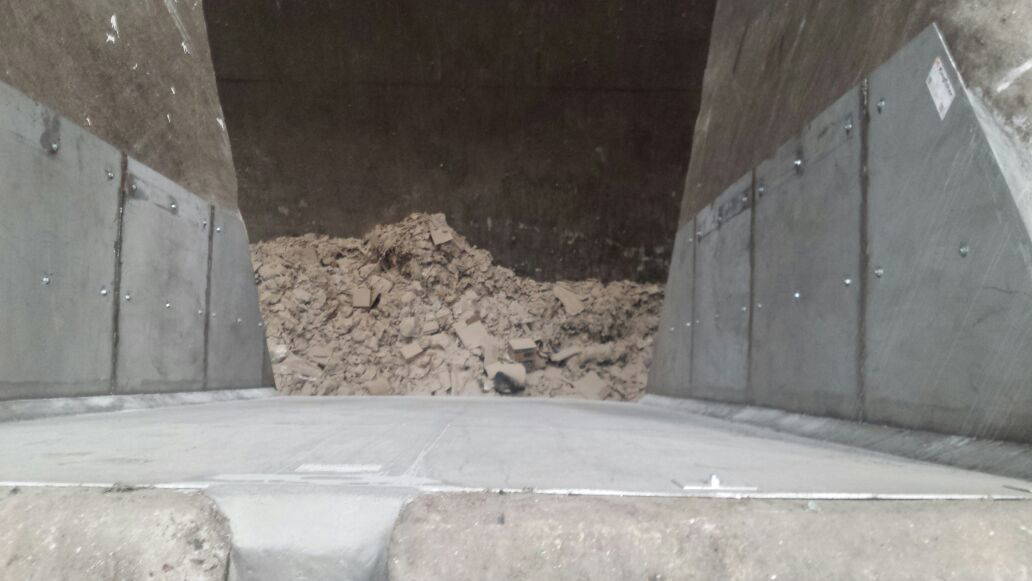
Waste chute installed. Once installed, the new chute provided a clean, robust, and corrosion-resistant flow path, restoring consistent waste transfer into the ERF process and eliminating the need for frequent manual clearance.
Results & Benefits –
The installation of the K-FLOW waste chute delivered measurable operational improvements, including:
- Blockages eliminated
- Consistent waste flow restored
- Reduced manual and mechanical intervention
- Improved safety exposure for site personnel
- Increased resistance to corrosion and abrasion
- Lower ongoing maintenance requirements.
The project demonstrated the value of engineered material selection in maintaining reliable operation in challenging waste-handling environments.
Next Steps –
Waste-handling equipment within Energy Recovery Facilities is exposed to some of the most demanding operating conditions in bulk material processing. Early identification of corrosion and flow issues allows engineered upgrades to be planned and implemented before reliability is compromised.
Book a site survey or request a technical consultation with Kingfisher Industrial to review your existing systems and explore opportunities to reduce future replacement costs.
01562 543108 or email enquiries@kingfisher-industrial.com.