





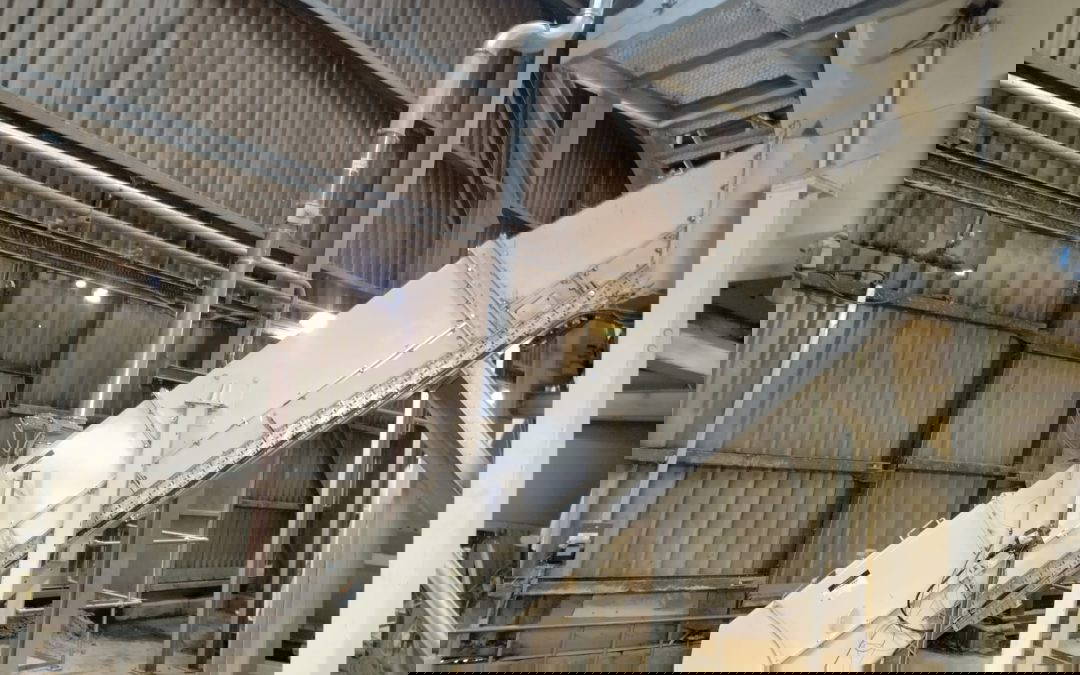
CASE STUDY: A major soya bean processing refinery required a long-term solution to prevent persistent wear and material build-up within its silo transfer chute system.
Overview
Silo transfer chute systems play a critical role in feeding processed soya beans into multiple storage silos, supporting the continuous production of high-protein soybeans for animal feed.
The existing chute lining system was failing prematurely, creating a growing maintenance burden and increasing the risk of production disruptions from chute blockages. Kingfisher Industrial was engaged to assess the issue and deliver an engineered replacement that would improve material flow, extend service life, and meet food-processing compliance requirements.
The Challenge
The silo transfer chutes were handling soya beans, an abrasive bulk material that places continuous stress on internal surfaces. The original chutes were lined with a polyurethane lining system, which, while suitable for some applications, deteriorated in service under these operating conditions.
As the liner wore, the internal surface became increasingly rough. This roughened profile encouraged material to stick and build up in the chute, leading to progressive and frequent blockages. When blockages occurred, maintenance teams were required to stop the process and dismantle the chutes to manually clear the blockages. As the chutes fed four separate silos, any blockage prevented silo filling. With no storage capacity available, production was forced to stop.
This resulted in:
- Increased maintenance intervention
- Loss of silo availability
- Production interruptions
- Growing operational risk.
Engineering Review
Kingfisher conducted a full-site survey of the existing silo transfer chutes. As no original manufacturing drawings were available, the chutes were reverse-engineered to ensure accurate integration with the upstream diverter and silo entry points.
The engineering review focused on:
- Identifying wear patterns and failure zones
- Understanding how surface condition affected material flow
- Assessing hygiene and food-chain compliance requirements
- Selecting a lining system capable of resisting wear while promoting consistent flow
Given that animal feed products ultimately enter the human food chain, material selection was subjected to the same level of scrutiny as human food-processing equipment.
This was not a like-for-like replacement. It was an engineering-led upgrade based on real operating conditions and observed failure mechanisms.
The Kingfisher Solution
Kingfisher designed and manufactured a complete replacement silo transfer chute system, lined internally with its K-ALOX ceramic lining system, which is FDA-approved for food-processing applications.
The solution incorporated:
- A low-friction ceramic lining to reduce material adhesion
- High wear resistance to withstand continuous abrasive flow
- A surface that becomes smoother in service, improving flow performance over time
- A design that integrated directly with the existing plant layout
The chutes were manufactured new and supplied as complete units, including a modular lower section designed to accommodate the highest wear zones.
Key Improvements
Unlike polymer-based liners that tend to roughen as they wear, the ceramic lining selected for this application maintains a stable surface condition. As the lining operates in service, the internal surface becomes smoother, improving material flow rather than degrading it.
This characteristic addressed the root cause of the previous blockages and ensured consistent discharge into the silo system.
Manufacture and Protection
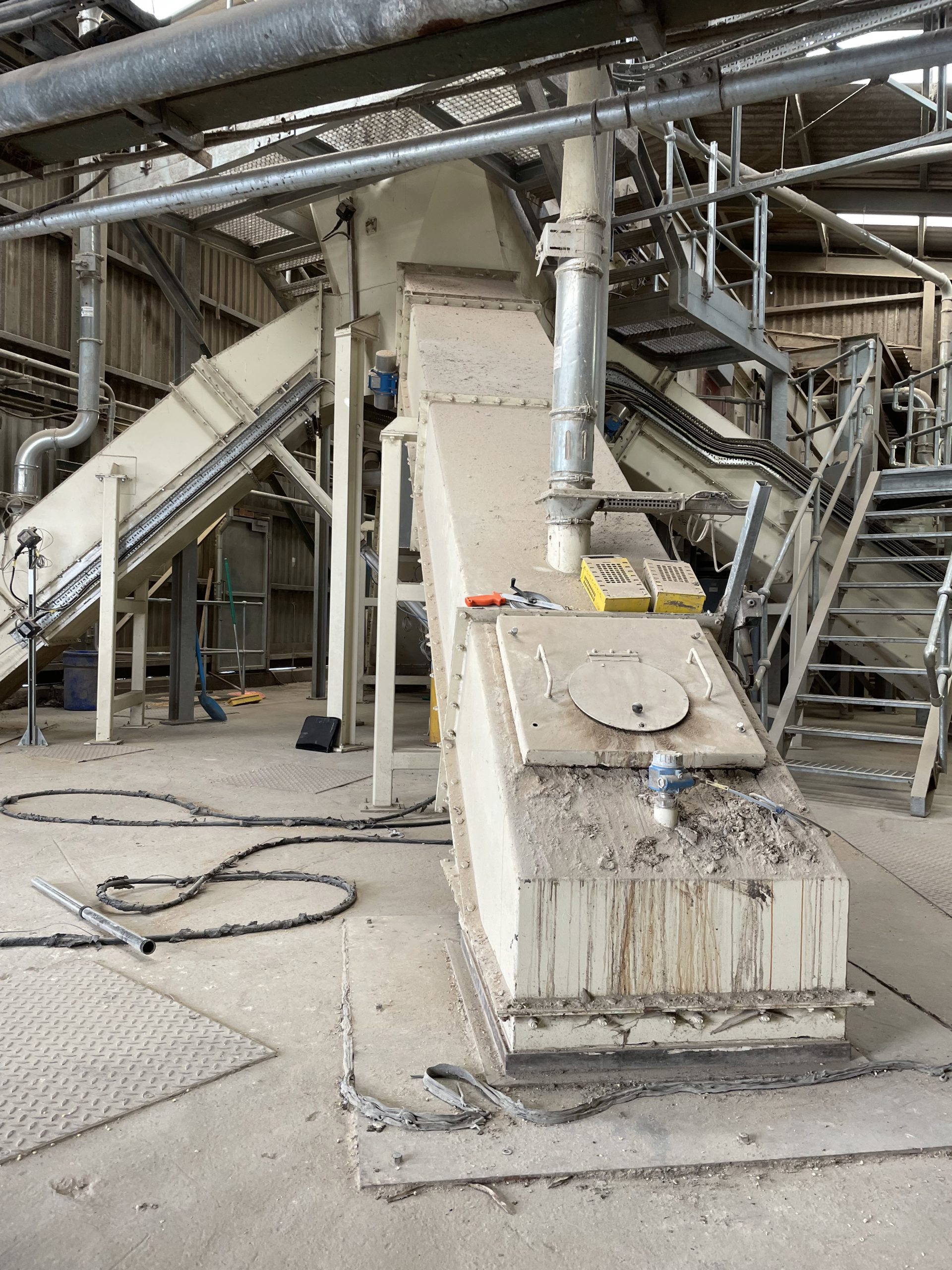
Original chutes being replaced
The original chutes exhibited visible spillage around the access doors, indicating frequent interventions to clear blockages and maintain flow.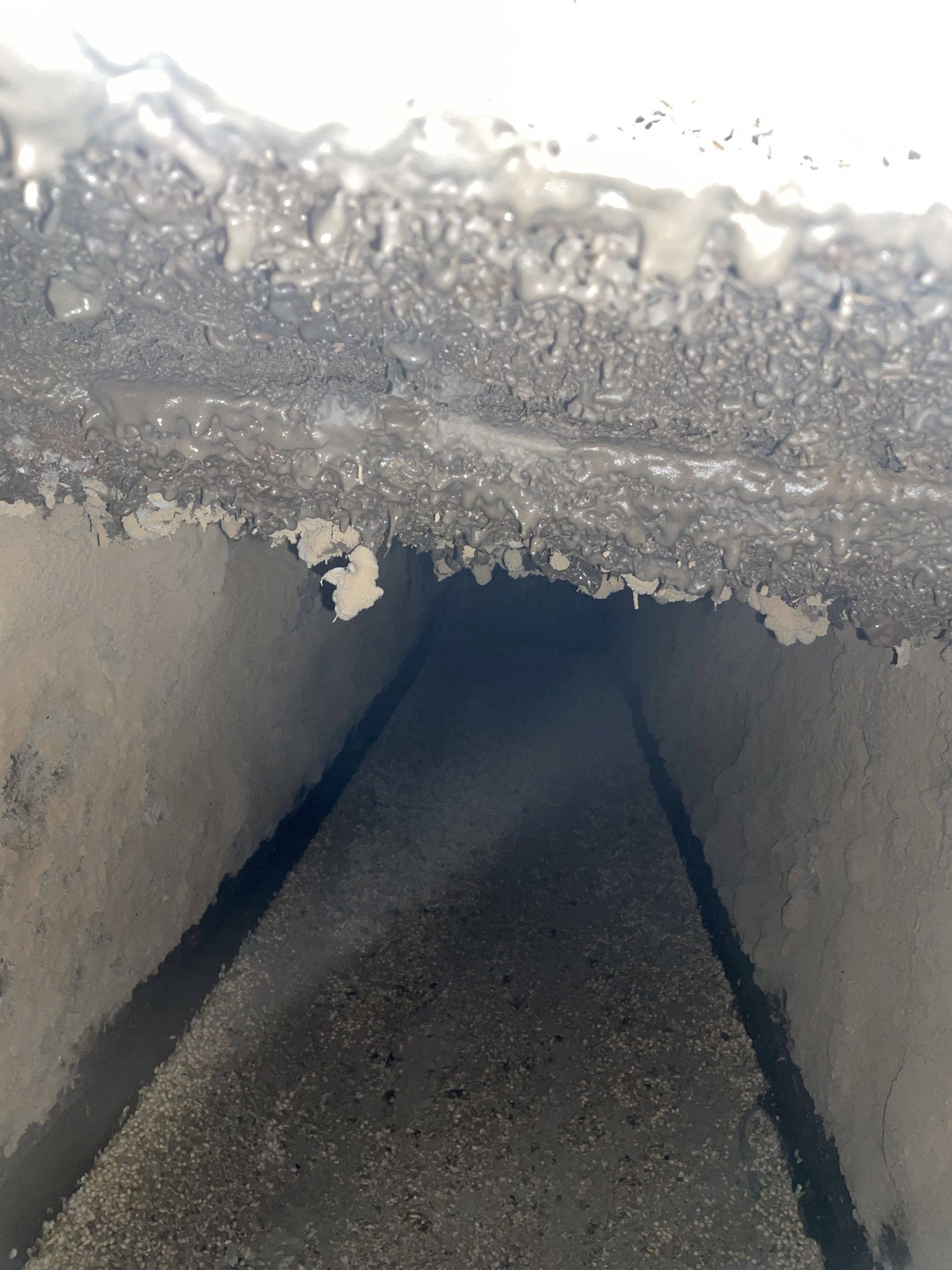
Original chute lining (internal view)
Inspection revealed significant material build-up on the roof, side walls and base of the chute. The liner surface had degraded and become rough, directly contributing to adhesion and blockage formation.
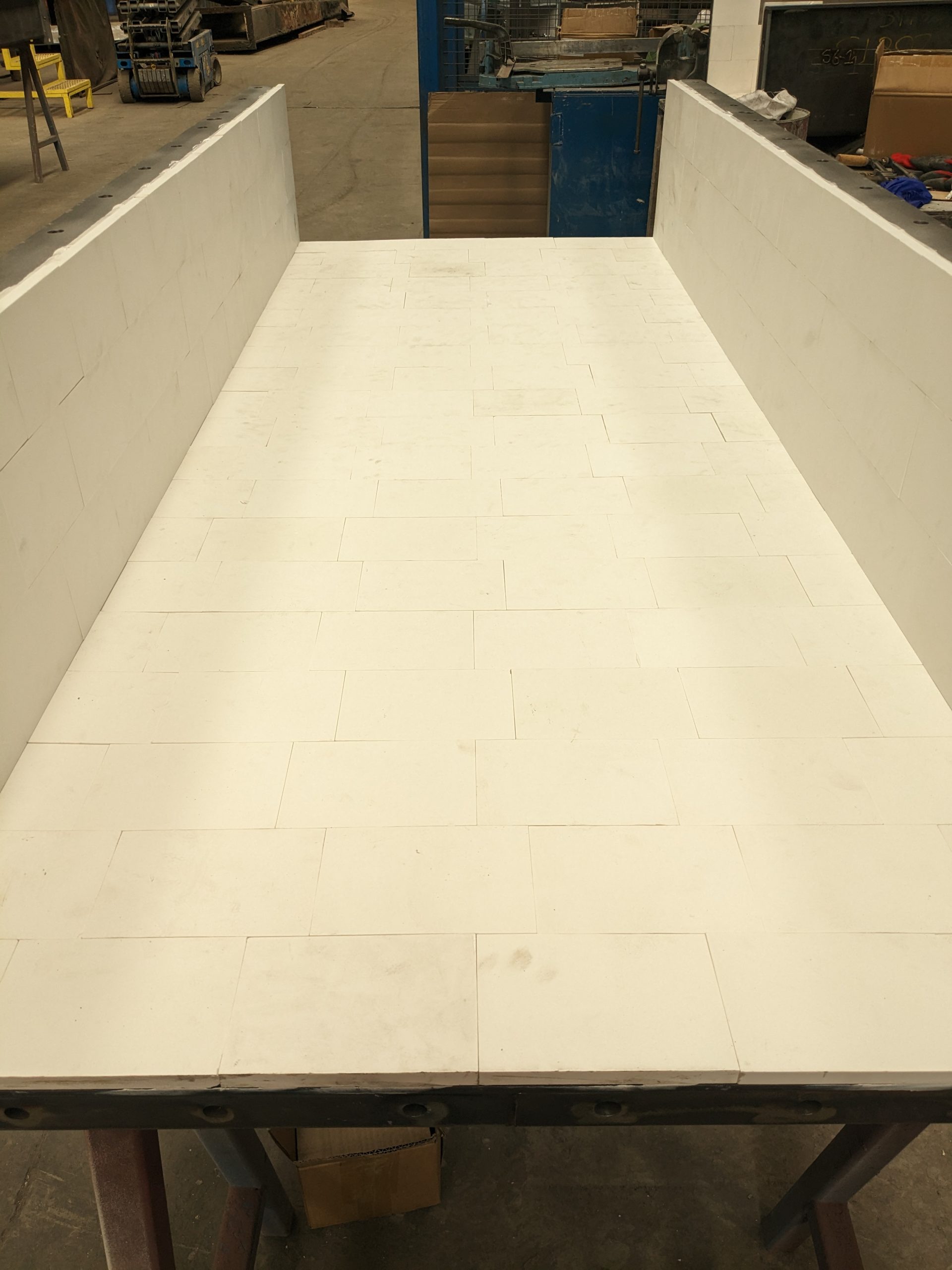
K-ALOX lining installed (factory)
Replacement chute sections were manufactured and lined at Kingfisher’s facility. The image shows the lower, high-wear section fully lined with K-ALOX ceramic tiles, designed for long-term abrasion resistance.
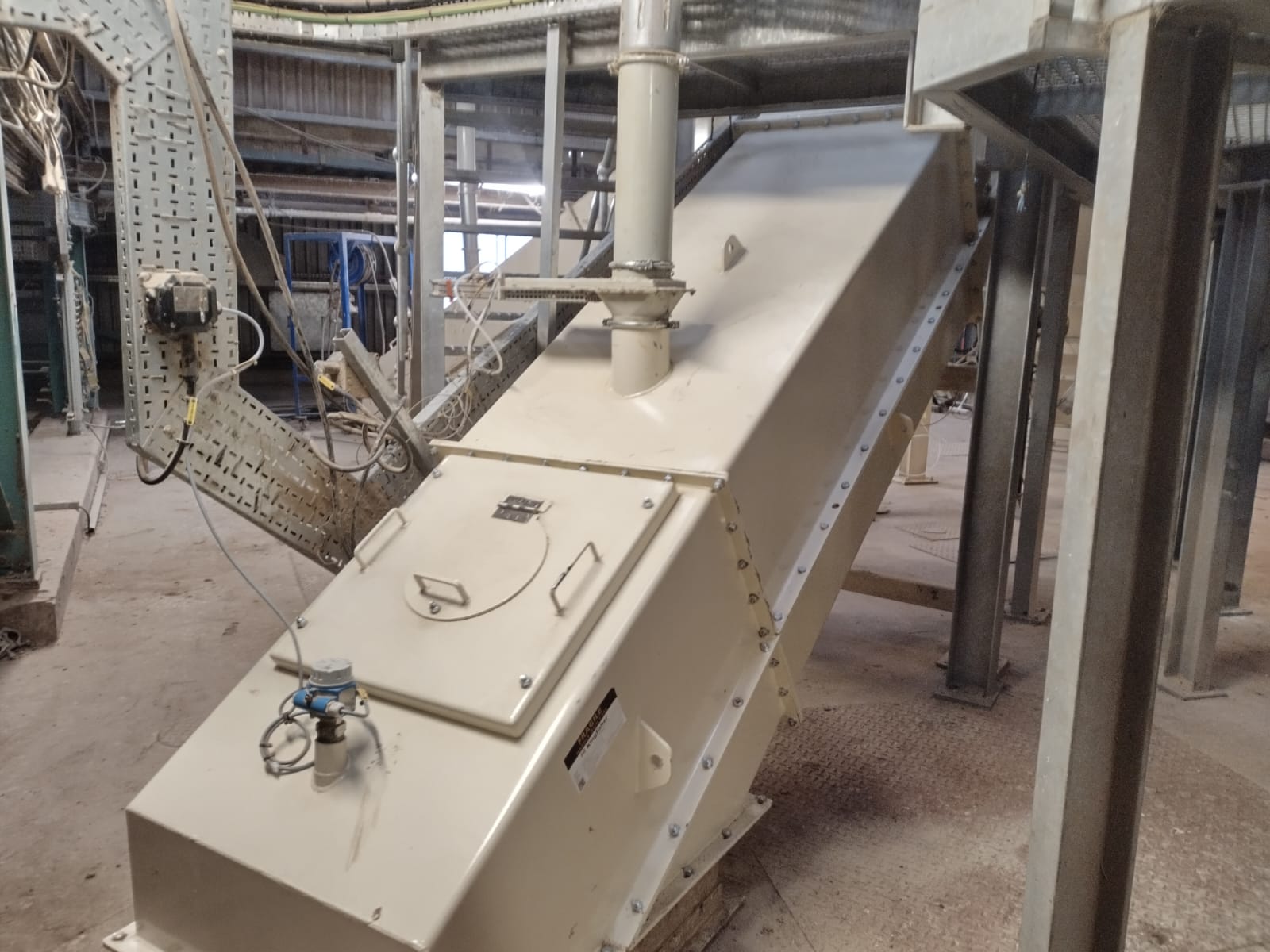
New chute after installation
The installed chute demonstrates a clean, sealed system with flanged connections. The modular design allows the high-wear section to be removed and refurbished or replaced independently in the future, reducing lifecycle cost.
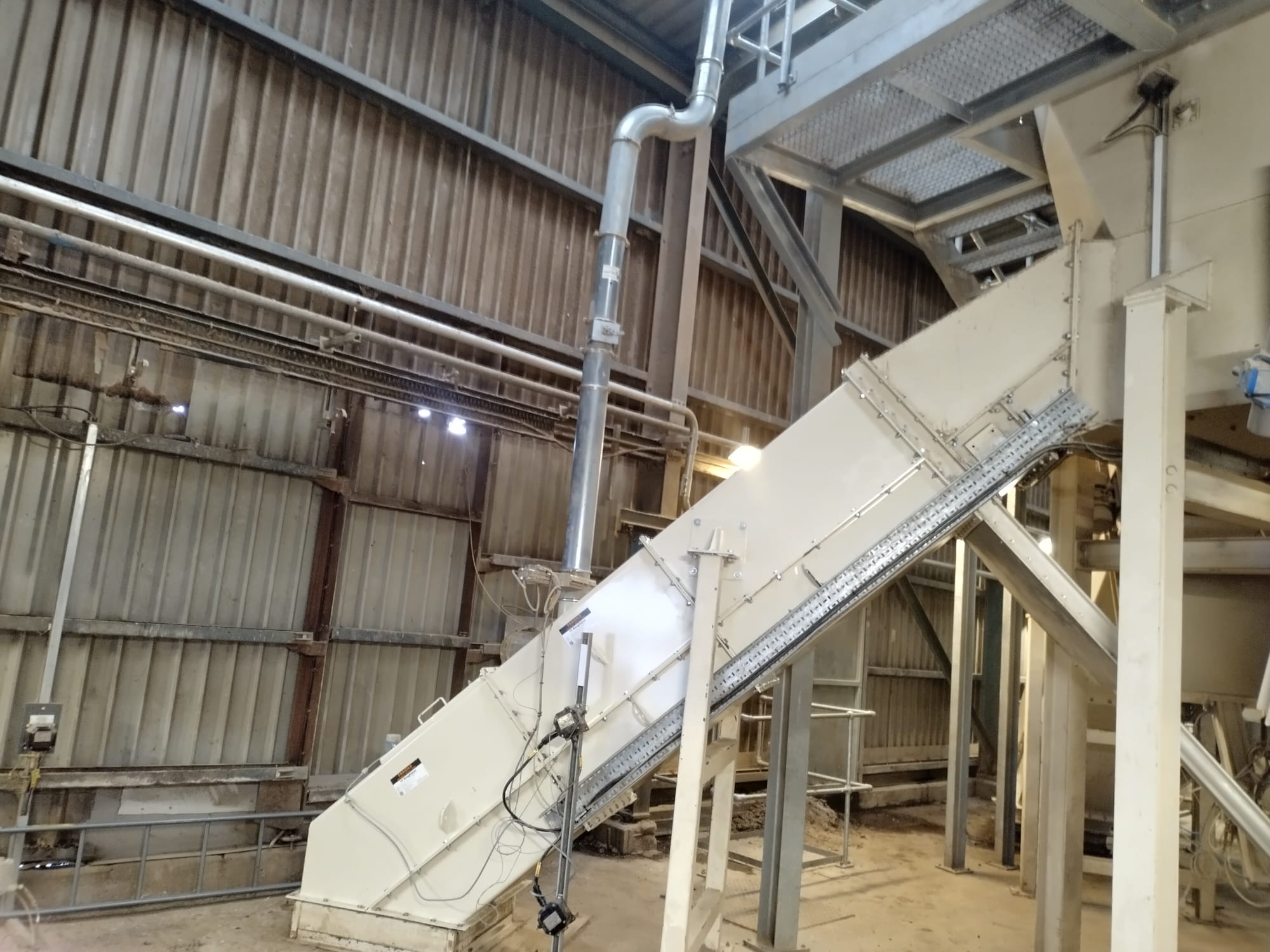
Results & Benefits – Based on the performance of the first replacement chute, the client placed a follow-on order within 12 months to replace the remaining three chutes feeding the silo system.
The project delivered:
- Elimination of chute blockages
- Reduced maintenance intervention
- Improved material flow consistency
- Extended service life of critical equipment
- Lower long-term replacement and downtime costs
Next Steps – For food, feed and grain processors, silo transfer chutes are often a hidden reliability risk. Incorrect liner selection can gradually degrade performance until production is halted.
Early engineering review and correct material specification allow these risks to be addressed during planned maintenance rather than reactive shutdowns.
Book a site survey or request a technical consultation with Kingfisher Industrial to review your existing systems and explore opportunities to reduce future replacement costs.
01562 543108 or email enquiries@kingfisher-industrial.com.